
Learn why adult teeth can move over time and when orthodontic treatment may help restore your smile.
Introduction
You lean in to floss one night, and the floss catches on a lower front tooth that has never given you trouble before. You look closer. One tooth is sitting just a little in front of its neighbor, and you are pretty sure it did not used to.
Maybe you had braces as a teenager, and your smile stayed straight for years. Maybe you never had braces at all. Either way, the same question follows: why are my teeth moving now?
It is one of the questions our team at Dailey Orthodontics hears most from adults in Hampton, Poquoson, and Newport News. The answer is reassuring. Shifting teeth are common, the causes are well understood, and adult teeth respond beautifully to treatment.
Is It Normal for Adult Teeth to Shift?
Yes, and it happens to far more people than you might think. Teeth are not set in concrete. Each one is held in the jawbone by tiny fibers that respond to every bite, swallow, and clench, and that bone keeps remodeling your whole life.
The AAO puts it plainly: our teeth never stop moving. Most of the time the change is so gradual that nobody notices until a tooth overlaps or a small gap appears.
Research backs this up. A study of more than 9,000 untreated Americans between ages 15 and 50, published in The Angle Orthodontist, found that crowding of the lower front teeth increased with age, and the biggest changes happened in early adulthood.
What Causes Teeth to Shift as an Adult?
There is rarely just one cause. Most adult shifting comes from a mix of the everyday factors below, and several of them are easy to manage once you know about them.
1. A Lifetime of Chewing and Natural Drift
Every meal puts a little pressure on your teeth, and over decades that adds up. Small, steady forces from chewing, your lips, and your cheeks nudge teeth bit by bit, which is a big reason crowding tends to increase as we age.
2. A Retainer That Stopped Getting Worn
If you had braces or aligners as a teenager, your retainer was meant to keep that result. The AAO notes that teeth naturally move back toward their original positions after treatment when retainers are not worn.
Life gets busy, retainers get lost, and many adults were never told that retainer wear is meant to be long-term. We hear this story every week, and it is one of the most fixable ones there is.
3. Changes in Gum and Bone Health
Your gums and the bone underneath are the foundation that holds each tooth in place. When gum disease weakens that support, teeth can fan outward, tip, or open new gaps, most often in the front of the mouth.
A review in the Journal of Periodontology reported that roughly 30% to 56% of patients with gum disease show this kind of tooth drift, with bone loss as a major factor. That is why healthy gums always come first, and why regular cleanings protect both your smile and its alignment.
4. A Missing Tooth That Was Never Replaced
When a tooth is lost or removed, and the space stays open, its neighbors do not stay put. The AAO explains that nearby teeth can tip or rotate into the gap, changing both your smile and how your teeth meet.
Replacing the tooth with an implant, bridge, or partial helps hold everything in place. Sometimes a little orthodontic work beforehand gives your dentist the ideal space for that replacement.
5. Grinding and Clenching
Many adults grind or clench at night without realizing it. According to the AAO, that extra pressure can wear down enamel and contribute to shifting over time.
If you wake up with a sore jaw or someone hears you grinding, ask your dentist whether a night guard makes sense for you.
6. Tongue Pressure
Your tongue is a strong muscle, and where it rests matters. The AAO notes that pushing the tongue against the front teeth when you swallow can gradually spread them apart, which is one way new gaps form. If a gap is your main concern, our post on whether braces can fix gaps in teeth covers how spacing is corrected.
Do Wisdom Teeth Cause Crowding?
This is one of the most common questions adults ask us, and the answer may surprise you. For years, wisdom teeth took the blame for crooked front teeth.
Research has not backed that up. The same national study found that erupted wisdom teeth were not linked to more crowding. A separate study that followed young people from age 12 to 21 found that lower front teeth grew more irregular whether wisdom teeth were present, missing, or removed.
Wisdom teeth can still need attention for other reasons, and that is a great conversation to have with your dentist or oral surgeon. For crowding itself, the reliable fix is orthodontic treatment followed by a retainer.
Signs Your Teeth May Be Shifting
Shifting teeth usually announce themselves in small ways first. Here is what adults tell us they noticed:
- Floss that snags or shreds between teeth that used to feel smooth.
- Food catching in new spots after meals.
- A small gap opening between front teeth, upper or lower.
- A lower front tooth starting to overlap its neighbor.
- A retainer that feels tight or no longer seats all the way down.
- Bite changes, like your teeth meeting in a new spot when you close or chew.
Spotting one of these is not a reason to worry. It is simply a good reason to have an orthodontist take a look, because smaller changes are often the simplest ones to correct.
Does a Small Shift Really Matter?
For many adults, the first reason to care is simple: you want to love your smile again. That is a wonderful reason all on its own.
There are health benefits, too. Crowded, overlapping teeth are harder to brush and floss well, and an uneven bite can put extra wear on certain teeth. Straighter teeth are easier to keep clean, which helps protect your gums for years to come.
How Can Adults Straighten Shifted Teeth?
Adult teeth respond to gentle, steady pressure the same way younger teeth do. The AAO notes that the process that moves teeth through bone is the same whether you are 8 or 80, though adult treatment can take a little longer because adult bone is denser.
That is a big reason adults now make up about one in three orthodontic patients, according to the AAO. Adult braces and adult aligners have come a long way, and today's options fit around work, family, and busy Peninsula schedules.
| Option | How it works | A great fit for |
|---|---|---|
| Invisalign clear aligners | Removable, nearly invisible trays worn about 22 hours a day, with a new set about every two weeks. | Adults who want a discreet option and can wear trays consistently. |
| BOOST clear aligners | Another clear aligner option we offer, worn on the same 22-hour schedule. | Adults who want clear aligners with a plan built around their case. |
| Ceramic braces | Brackets in a tooth-colored material that blends in with your smile. | Adults who want braces without the metal look. |
| Metal braces | Classic brackets and wires that stay on and work around the clock. | Bigger movements, or anyone who would rather not manage removable trays. |
| Accelerated orthodontics | Techniques that can shorten treatment time for qualifying cases. | Adults who want to finish sooner, when their case allows it. |
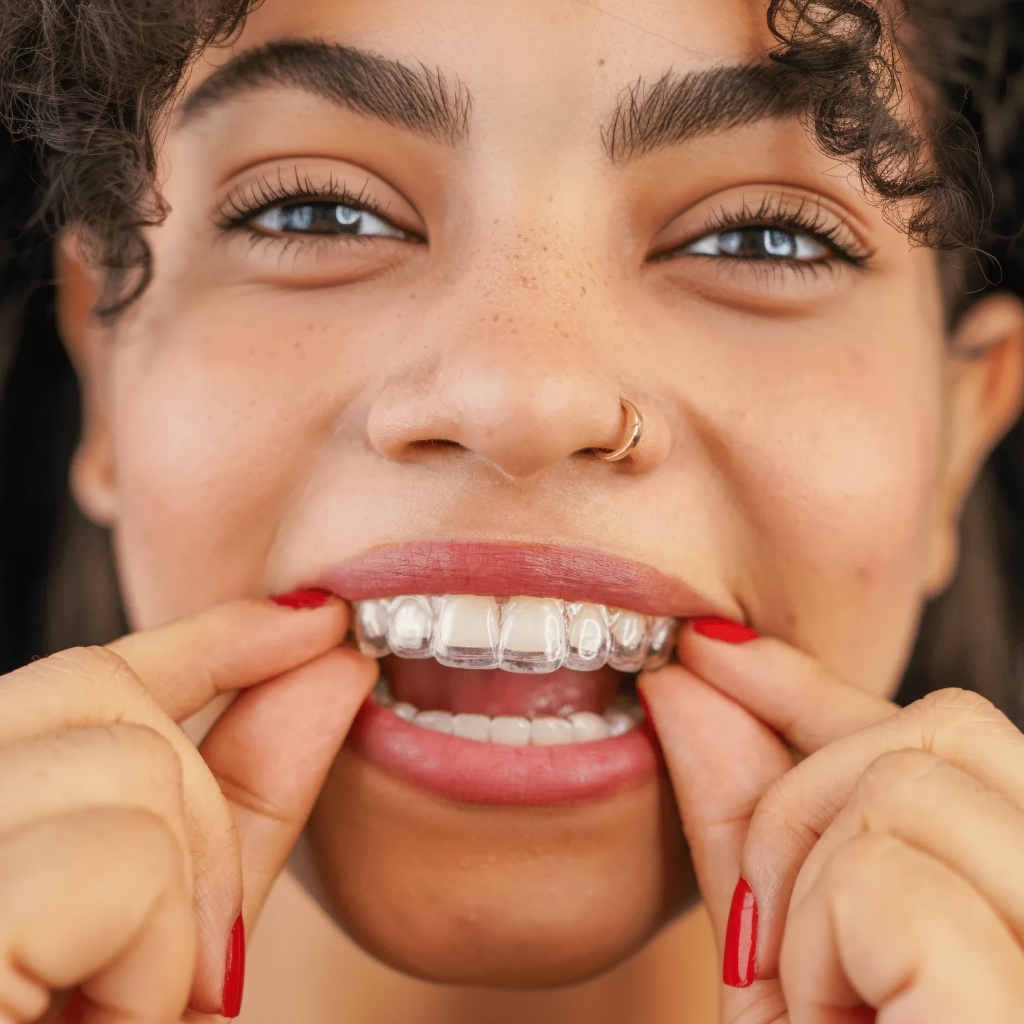
It is no surprise that so many adults choose Invisalign for this kind of correction. The trays come out for meals and meetings, and most people around you will never notice them.
The right choice depends on how far your teeth have moved and what your bite needs. We will show you the options that work for your smile, and you choose the one that fits your life.
Can a New Retainer Fix Shifted Teeth?
Sometimes. If your teeth have moved only a small amount, the AAO notes that you may simply need to be fitted for a new retainer. When teeth have moved more, another round of orthodontic treatment is usually the better path.
This is exactly the kind of question a consultation answers. A 3D digital scan shows us where each tooth sits today, so we can recommend the simplest option that will actually do the job.
What Happens at an Adult Consultation?
Your first visit is relaxed, friendly, and built around your questions. Here is how it usually goes:
- A conversation first. You tell us what you have noticed and what you would love to change.
- An exam and 3D scan. Instead of goopy impressions, we capture your teeth with a digital scanner, and a digital smile preview can show you a projected result.
- A gum health check. The AAO recommends treating any active gum disease or decay before teeth start moving, and we are happy to coordinate with your dentist.
- Your options, explained. We share what is causing the shift, which treatments fit, and about how long each one would take.
- Your decision, your pace. Same-day starts are often possible if you are ready. If you would like time to think it over, that is completely fine too.
Want the full picture ahead of time? We cover every step of your new patient consultation, and our virtual appointments let you meet our team from home first.
How Do You Keep Teeth From Shifting Again?
Once your smile is back where you want it, a few simple habits help keep it there. The AAO recommends these four:
- Wear your retainer as directed. Most patients move to nighttime wear, and caring for your retainer becomes an easy part of your bedtime routine.
- Keep up with cleanings and gum checkups. Healthy gums and bone are what hold your teeth steady.
- Protect against grinding. Ask your dentist about a night guard if you clench or grind.
- Replace missing teeth. Filling a gap gives neighboring teeth nothing to drift into.
Your retainer is included in our all-inclusive pricing, so this final step is already part of your plan from the very first day.
Meet Dr. Dailey
Dr. Curtis Dailey has practiced orthodontics on the Virginia Peninsula since 2002, carrying on a practice his father founded in 1971. He studied at Hampden-Sydney College and earned his DDS at the University of North Carolina at Chapel Hill.
He completed a general dental residency at the University of Virginia and earned his Certificate in Orthodontics at Children's National Medical Center in Washington, D.C. He also trained in pediatric dentistry, giving him a broad view of how smiles change from childhood through adulthood.
Why Adults Across the Peninsula Choose Dailey Orthodontics
- Discreet options for grown-up schedules. Invisalign, BOOST aligners, and ceramic braces let you straighten your smile without putting life on hold.
- Scans, not impressions. Our 3D digital scanning system and digital smile preview let you see where your smile is headed before you commit.
- Three offices, one number. Hampton, Poquoson, and Newport News patients all reach us at 757.826.5075.
- Your retainer, included. All-inclusive pricing covers the retainer that keeps your result in place.
- Flexible ways to start. Virtual appointments and same-day treatment starts make it easy to begin when it works for you.
- A family practice since 1971. Two generations of Daileys have helped Peninsula families smile with confidence.
Frequently Asked Questions
Why are my bottom teeth getting crooked in my 30s?
Lower front teeth are the most common place adults notice crowding. Small, steady forces from chewing, your lips, and your tongue nudge teeth over time, and research shows lower front crowding tends to increase through adulthood. Gum changes, grinding, and past retainer habits can add to it. An orthodontic exam can pinpoint which factors apply to you.
Can teeth shift back years after braces?
Yes. Teeth can move at any point in life, and the AAO notes that teeth naturally move back toward their original positions when retainers are not worn. This can happen five, ten, or twenty years after braces come off. The good news is that relapse is very treatable, often with clear aligners, followed by a retainer to hold the result.
Is it too late to get braces as an adult?
No. There is no age limit on orthodontic treatment as long as your teeth and gums are healthy. The process that moves teeth through bone works the same at any age, although adult treatment can take a little longer because adult bone is denser. Adults choose metal braces, ceramic braces, and clear aligners every day.
Is adult Invisalign a good option for shifted teeth?
Often, yes. Invisalign and other clear aligners work well for many adults whose teeth have crowded, spaced, or rotated over time, especially after earlier braces. Aligners are removable and nearly invisible, and you need to wear them about 22 hours a day. Your orthodontist will confirm whether aligners or braces are the better fit for your bite.
Do wisdom teeth make your front teeth crooked?
Research says probably not. A large national study found erupted wisdom teeth were not linked to more crowding, and a longitudinal study found lower front teeth grew more irregular whether wisdom teeth were present, missing, or removed. Wisdom teeth may need care for other reasons, so talk with your dentist about them separately.
How can I stop my teeth from shifting?
Wear your retainer as directed, ideally at night for life. Keep up with dental cleanings so your gums and bone stay healthy, ask your dentist about a night guard if you grind, and replace missing teeth so neighbors have nothing to drift into. If teeth have already moved, orthodontic treatment can realign them first.
Sources
American Association of Orthodontists. "Does Your Smile Change As You Age?" https:/
American Association of Orthodontists. "Adult Orthodontics." https:/
American Association of Orthodontists. "There's No Such Thing as Being 'Too Old' for Orthodontic Treatment." https:/
American Association of Orthodontists. "Orthodontic Treatment for Adults: The Rise of Adult Braces." https:/
Buschang PH, Shulman JD. "Incisor crowding in untreated persons 15-50 years of age: United States, 1988-1994." The Angle Orthodontist. 2003;73(5):502-508. https:/
Brunsvold MA. "Pathologic tooth migration." Journal of Periodontology. 2005;76:859-866. https:/
Zigante M, Pavlic A, Morelato L, Vandevska-Radunovic V, Spalj S. "Presence and Maturation Dynamics of Mandibular Third Molars and Their Influence on Late Mandibular Incisor Crowding: A Longitudinal Study." International Journal of Environmental Research and Public Health. 2021;18(19):10070. https:/
Medical Disclaimer
This article provides general educational information about why adult teeth shift and how orthodontic treatment may help. It is not a diagnosis or a substitute for professional care. Every smile is different, and the right treatment can only be determined through an in-person examination by a qualified orthodontist. If you have gum pain, bleeding, loose teeth, or jaw pain, please see your dentist.